This peptide certificate of analysis guide explains how to review batch identity, purity, measured content and expanded third-party testing results.
How to Read a Peptide Certificate of Analysis
A peptide certificate of analysis should connect a clearly identified batch with the laboratory methods and results reported for that material. This guide explains how to review identity, purity, measured content and broader screening without treating one number as the complete testing picture.
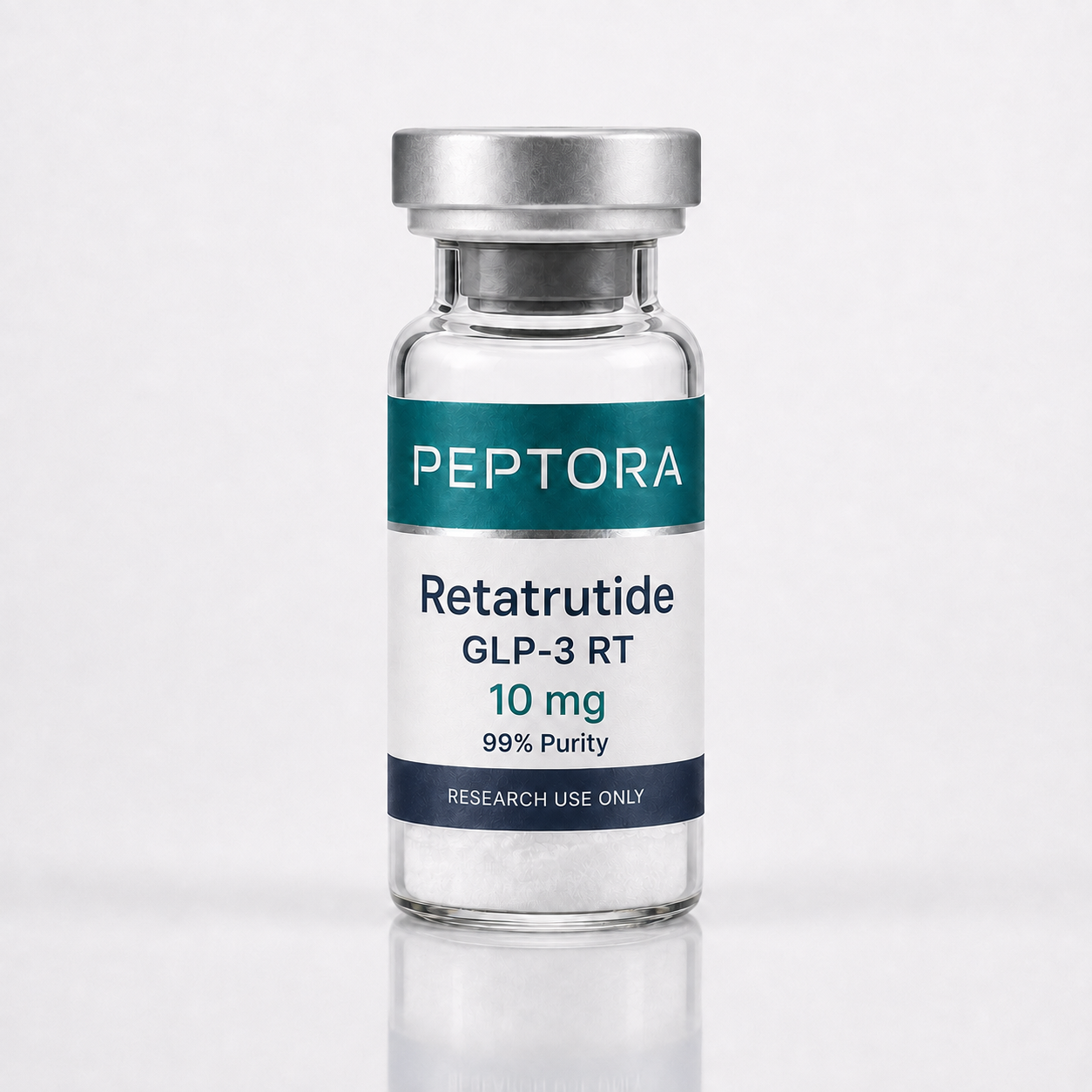
What Information Should a Peptide Certificate of Analysis Contain?
A Certificate of Analysis, commonly shortened to COA or CoA, is a laboratory document that reports the analyses performed on an identified material or batch. Depending on the requested panel, it may show a sample identifier, batch or lot reference, test methods, numerical results, qualitative findings, dates and laboratory authorization.
The presence of a peptide certificate of analysis alone does not establish that every relevant characteristic was tested. The useful questions are: Which batch was analyzed? Which tests were performed? Which methods were used? What results were obtained?
FDA guidance for active pharmaceutical ingredients states that authentic certificates should list each test performed, the acceptance limits and numerical results where tests produce numbers. Although Peptora materials are supplied strictly for non-clinical laboratory research and are not pharmaceutical products, that reporting principle provides a useful framework for reading analytical documentation.
Match the Peptide Certificate of Analysis to the Product Batch
Before interpreting a purity result or pass designation, confirm that the document actually applies to the product being reviewed.
Product or sample name
Confirm the compound designation and labelled strength correspond with the product listing. Note any internal sample name used by the laboratory.
Batch or lot identifier
The identifier on the product page and vial should match the batch reference associated with the certificate.
Report number
A unique report or certificate number supports document tracking and independent lookup where the laboratory offers verification.
Dates
Review sample receipt, testing and report dates where provided. They help establish when the analysis occurred.
Laboratory identity
Look for the testing laboratory’s name, contact information or verification portal—not only a supplier-created summary.
Full certificate
Open the complete report to review methods, units, qualifiers and notes that cannot fit into a product-page snapshot.
How a Peptide Certificate of Analysis Reports Identity
Identity analysis asks whether the submitted sample is consistent with the expected compound. Laboratories may use mass spectrometry, chromatographic retention behaviour or other analytical approaches depending on the material and requested scope.
For example, liquid chromatography–mass spectrometry can combine separation information with a measured mass-to-charge signal. A report may compare an observed molecular mass with an expected value. The precise conclusion is limited to the method, reference information and acceptance criteria described by the laboratory.
Purity analysis answers a different question: it estimates the relative proportion represented by the principal detected component under the stated analytical conditions. A high purity result does not, by itself, confirm the total amount of material in the vial.
Reading Purity and Net Content on a Peptide Certificate of Analysis
A certificate showing 99% chromatographic purity is not automatically showing that a vial contains 99% of its labelled milligram quantity.
Relative analytical composition
RP-HPLC or another chromatographic method may report the main peak as a percentage of detected peak area under specified conditions. Review the method, wavelength, integration approach and any exclusions or notes presented by the laboratory.
Quantity in the tested sample
A content or mass determination reports a measured quantity—often in milligrams—using the method stated on the certificate. Where multiple vials are tested, determine whether the report displays individual results, an average or both.
mg, %, EU/mL, EU/mg, ppm and qualitative findings such as “not detected” describe different measurements. Interpret every result together with its unit, method and stated reporting limit.
Why Peptora Says “We Test Beyond Purity”
A purity number addresses only one part of a broader analytical profile. Where reported for the applicable batch, Peptora’s third-party documentation may also include identity, measured content and expanded screening.
Testing panels vary by product and batch. Always review the complete certificate attached to the individual product page before relying on a listed test.
What Common Peptide Certificate of Analysis Findings Mean
| Report item | What to look for | Important limitation |
|---|---|---|
| Identity | Observed result, expected reference and the method used. | Interpretation is limited to what that analytical method can establish. |
| Purity | Percentage, chromatographic method and any accompanying chromatogram or notes. | Purity is not the same as measured vial content. |
| Net content | Measured quantity, units, number of units tested and whether a result is individual or averaged. | The reported result applies to the submitted test sample. |
| Sterility | Result such as no growth, method and incubation or reporting period where shown. | It reports conditions at testing; it does not guarantee future sterility after handling. |
| Endotoxins | Numerical result or pass designation, units and acceptance criterion. | Units such as EU/mL and EU/mg are not interchangeable. |
| Heavy metals | Which elements were tested, their individual findings and reporting limits. | A “pass” only covers the listed panel and criteria. |
| Targeted presence screen | The named analyte, method, result and detection or reporting limit where provided. | “Not detected” does not mean absolute zero or screening for every possible substance. |
Peptide Certificate of Analysis Review Checklist
- Product or sample name is identified
- Batch or lot number matches
- Independent laboratory is named
- Report number can be verified
- Testing and report dates are visible
- Each test method is identified
- Numerical results include units
- Acceptance limits are shown where applicable
- Purity is not mistaken for content
- Full certificate—not only a summary—is available
Peptide Certificate of Analysis Frequently Asked Questions
Does 99% purity mean a 10 mg vial contains 9.9 mg?
Can a COA apply to every batch of the same peptide?
What does “not detected” mean?
Does a sterility pass guarantee a vial will remain sterile?
Why is third-party verification useful?
Does every Peptora product have the same testing panel?
Laboratory and Analytical References
These external sources provide background on certificate reporting, laboratory competence and peptide analytical methods. They do not evaluate or endorse Peptora products.
- U.S. FDA — Q7A Good Manufacturing Practice Guidance for Active Pharmaceutical Ingredients
- International Organization for Standardization — ISO/IEC 17025 Testing and Calibration Laboratories
- United States Pharmacopeia — Peptide Standards and Analytical Method Support
- USP scientific publication — Reference Standards to Support Quality of Synthetic Peptide Therapeutics