Research Library. Scientific Context, Organized.
The Peptora Research Library brings together compound-specific research, peptide testing education, Certificates of Analysis guidance and laboratory-reference resources for non-clinical research.
Research Overviews
Compound-specific scientific context, research comparisons and blend-reference articles.
Testing & COA Guides
Understand purity, identity, measured content, analytical methods and batch verification.
Research Guides
Peptide terminology, scientific documentation and responsible laboratory-reference education.
Browse Peptora’s published educational resources covering research peptides, compound-specific scientific context, peptide testing, Certificates of Analysis and laboratory documentation.
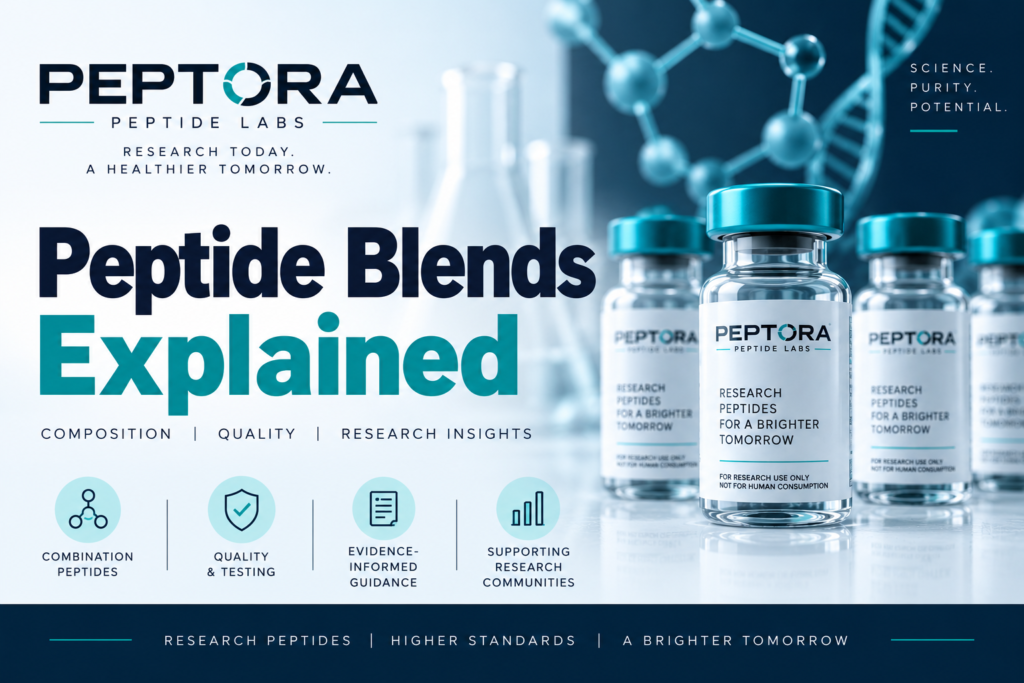
Learn how peptide blends combine multiple research peptides in a single material, why composition and batch documentation matter, and how researchers can evaluate COAs, testing, and individual…
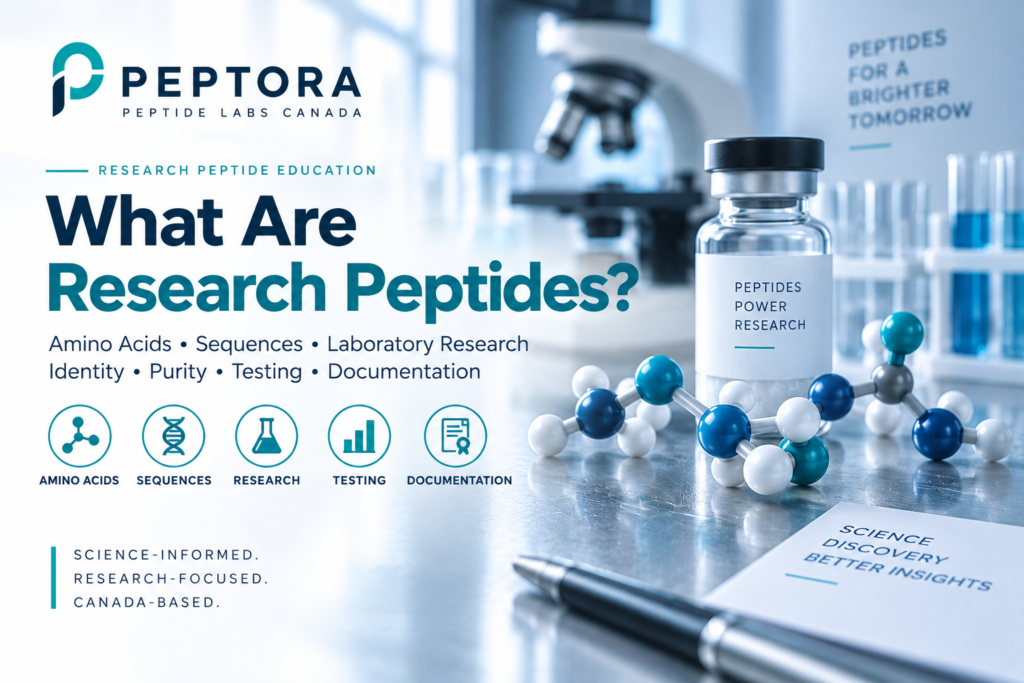
What are research peptides? Learn how amino-acid sequences are studied in controlled laboratory research and why identity, purity, stability, testing and batch-specific documentation matter.
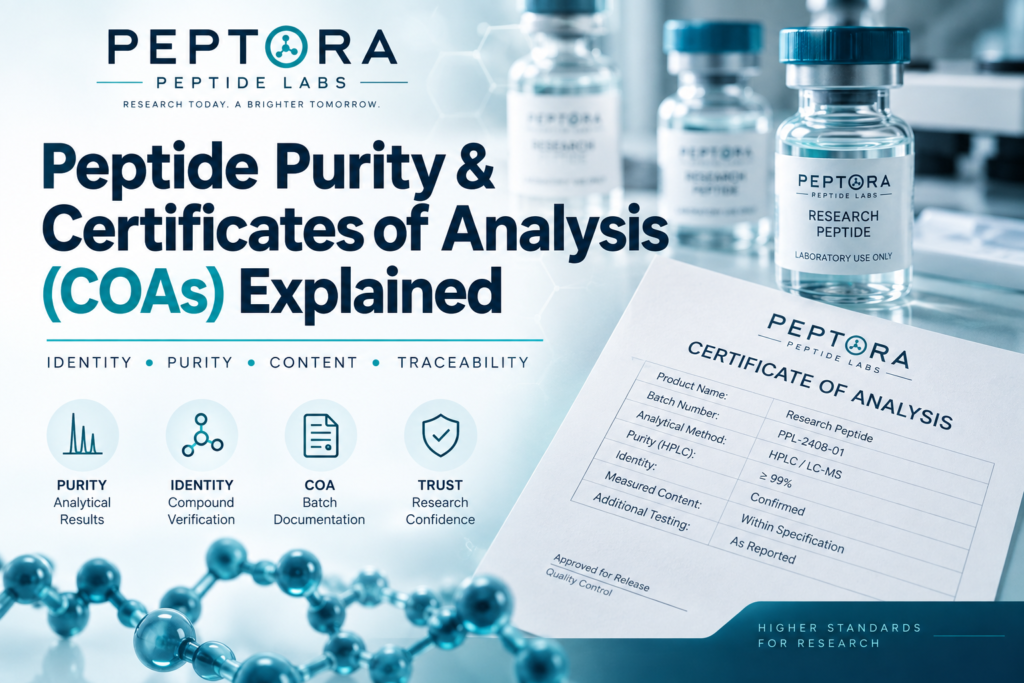
Peptide purity and Certificates of Analysis explained: learn how to interpret purity, identity, measured content, batch traceability, analytical methods and additional testing reported on peptide COAs.
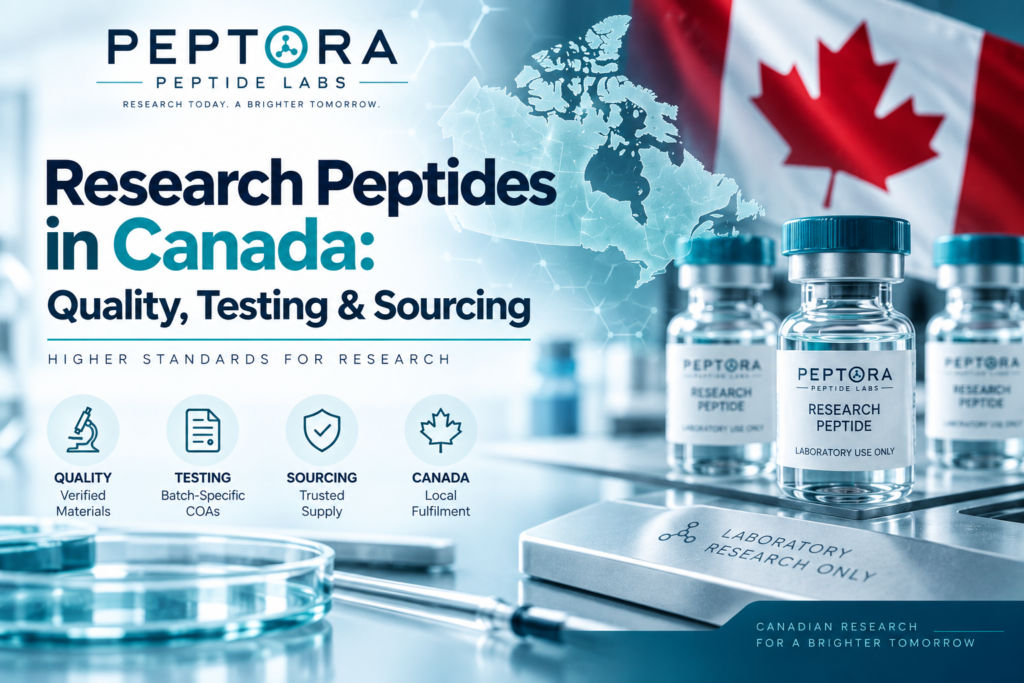
Research peptides in Canada should be evaluated through quality, batch-specific testing, COAs, independent verification, traceability and clear Canadian sourcing and fulfilment information.
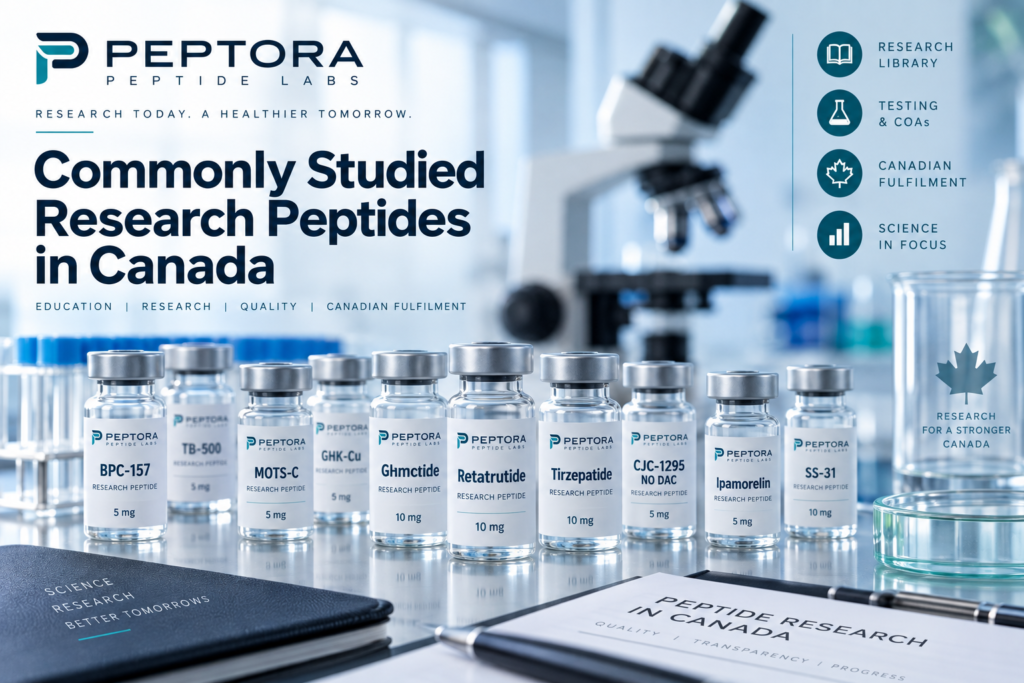
Explore commonly studied research peptides in Canada, including Retatrutide, Tirzepatide, MOTS-C, GHK-Cu, BPC-157, TB-500 and other compounds, with links to testing resources and individual research overviews.
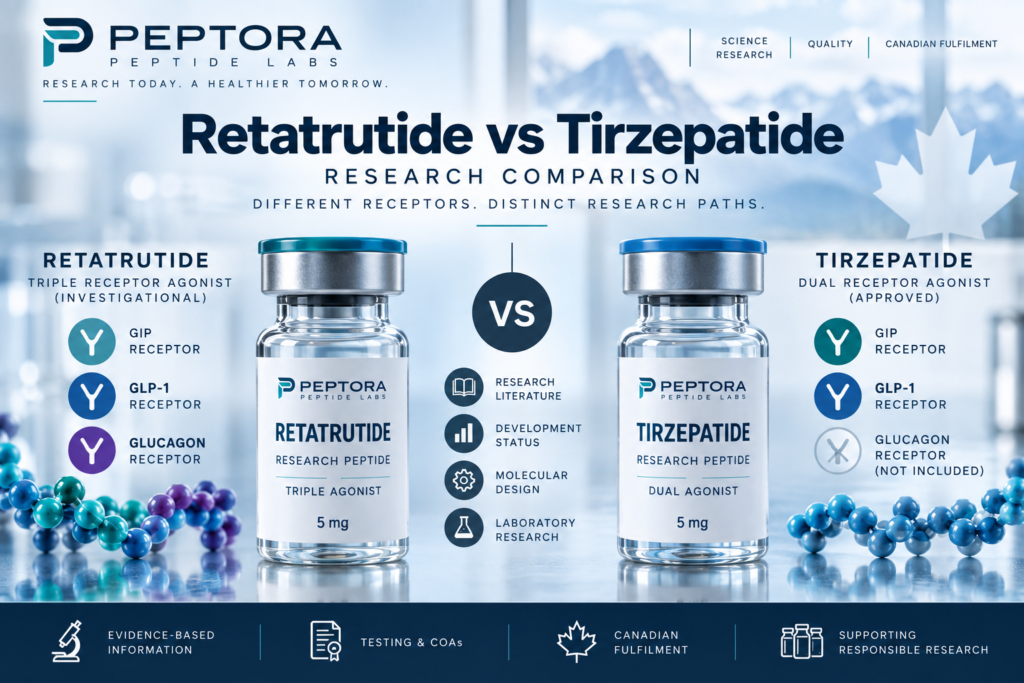
Retatrutide vs Tirzepatide research comparison covering their different receptor profiles, GIP and GLP-1 activity, retatrutide's additional glucagon-receptor activity, scientific evidence, development status and laboratory research considerations.
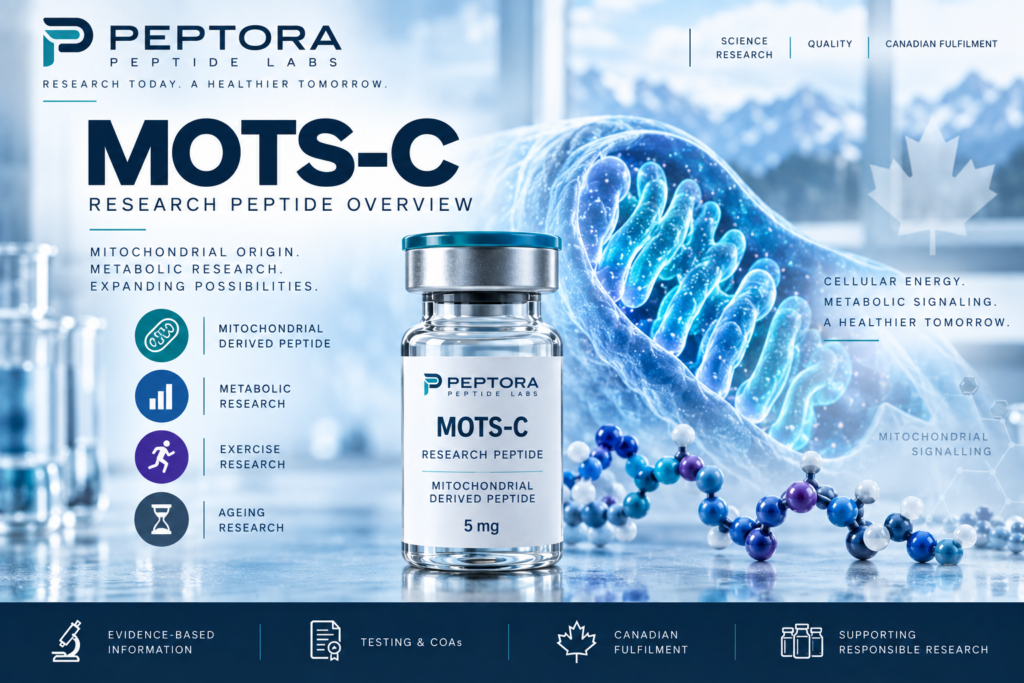
MOTS-C research peptide overview covering its mitochondrial origin, 16-amino-acid structure, cellular signalling, metabolic research, skeletal muscle, exercise, ageing research and batch-specific analytical documentation.
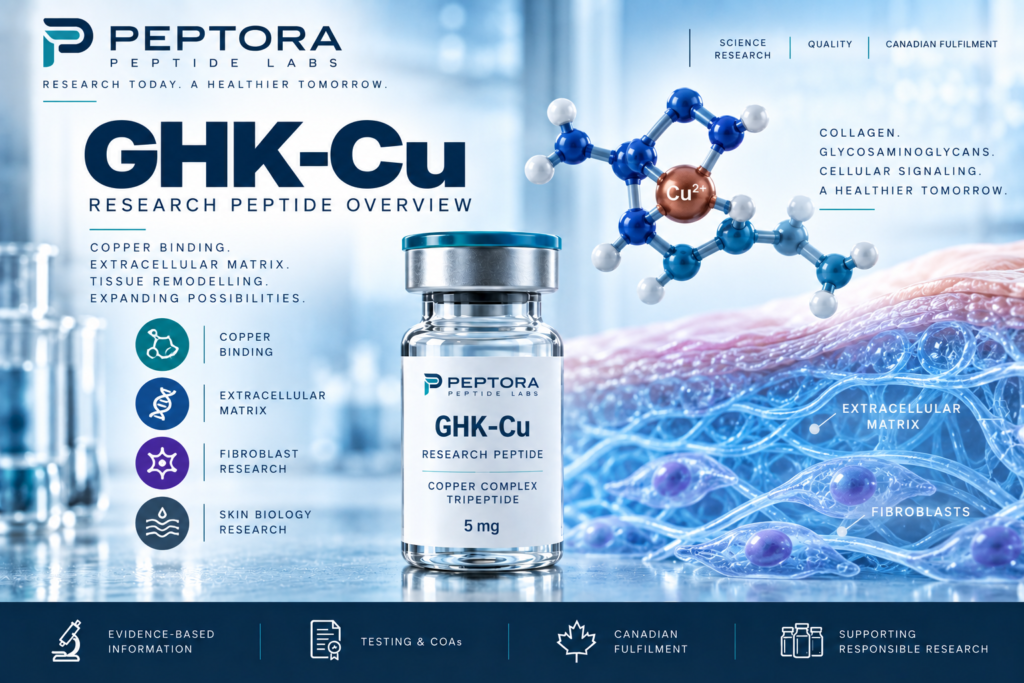
GHK-Cu research peptide overview covering its Gly-His-Lys tripeptide structure, copper binding, extracellular-matrix research, fibroblast biology, collagen, tissue remodelling and batch-specific analytical documentation.
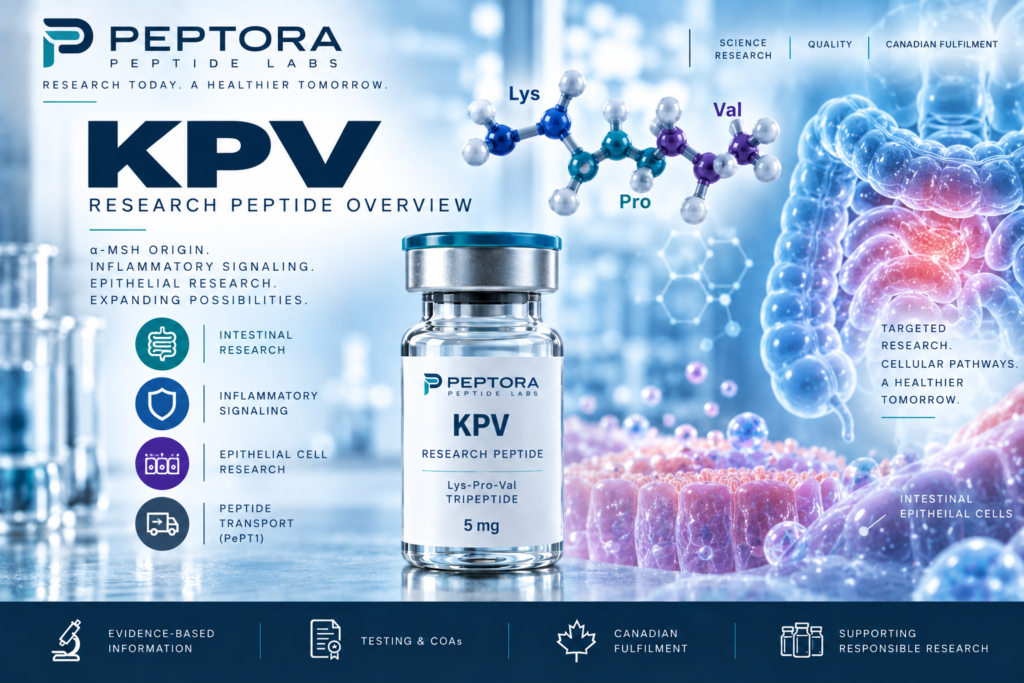
KPV research peptide overview covering its Lys-Pro-Val tripeptide structure, α-MSH origin, PepT1 transport, cellular signalling, epithelial biology and experimental intestinal research.
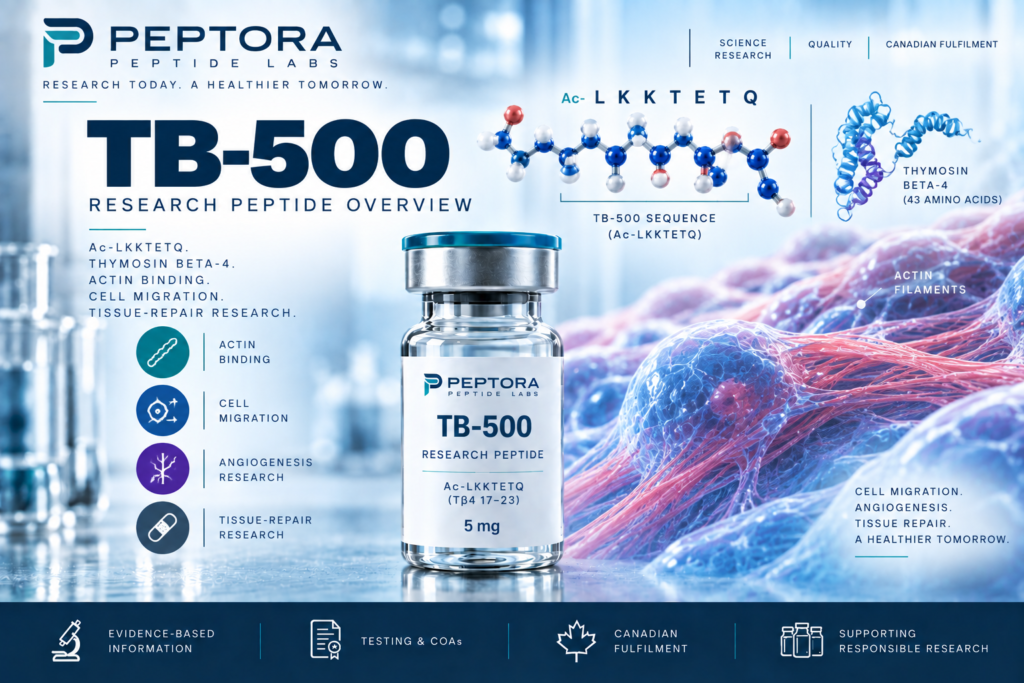
TB-500 research peptide overview covering Ac-LKKTETQ, its relationship to thymosin beta-4, actin-binding research, cell migration, tissue-repair models, metabolism and batch-specific analytical documentation.
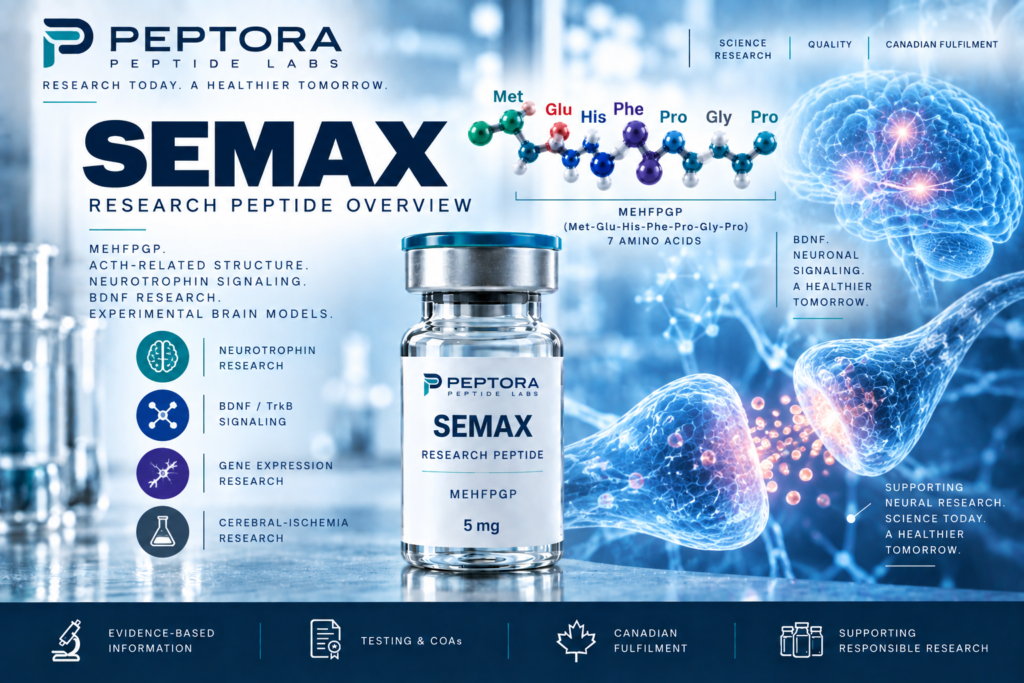
Semax research peptide overview covering its MEHFPGP sequence, ACTH-related structure, Pro-Gly-Pro region, BDNF and TrkB signalling, neurotrophin research, gene expression and experimental neural models.
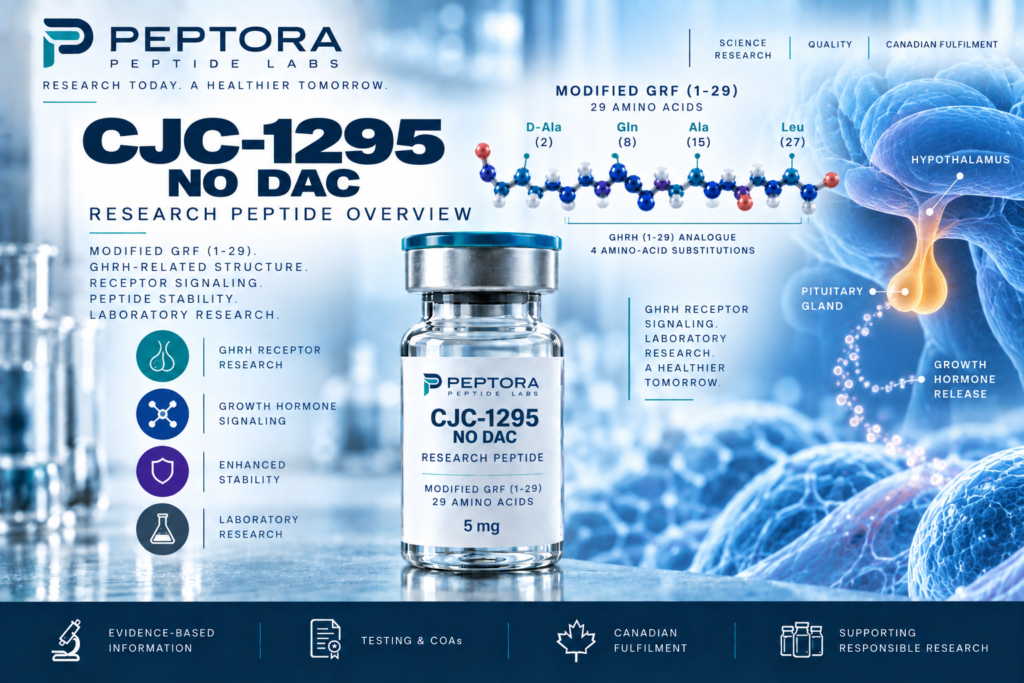
CJC-1295 No DAC research peptide overview covering Modified GRF (1-29), GHRH-related structure, amino-acid substitutions, receptor signalling, the DAC distinction and batch-specific analytical documentation.
Peptora’s Research Library provides educational
context for non-clinical laboratory research.
Product-specific analytical results should always
be reviewed against the Certificate of Analysis
and batch identifier for the material being
referenced.
Explore the Research Library
Latest Research Articles
Showing newest published resources first
 Research Peptide Education
Peptide Blends Explained
 Research Peptide Education
What Are Research Peptides?
 Peptide Testing
Peptide Purity & Certificates of Analysis (COAs) Explained
 Research Peptide Education
Research Peptides in Canada: Quality, Testing & Sourcing
 Research Peptide Education
Commonly Studied Research Peptides in Canada
 Research Peptide Education
Retatrutide vs Tirzepatide: Research Comparison
 Research Peptide Education
MOTS-C Research Peptide Overview
 Research Peptide Education
GHK-Cu Research Peptide Overview
 Research Peptide Education
KPV Research Peptide Overview
 Research Peptide Education
TB-500 Research Peptide Overview
 Research Peptide Education
Semax Research Peptide Overview
 Research Peptide Education
CJC-1295 No DAC Research Peptide Overview
Research Documentation & Testing
Understand Peptide Testing & COAs
Explore Peptora’s educational resources covering Certificates of Analysis, analytical testing methods, purity, identity and batch-specific documentation for non-clinical laboratory research.
How to Read a Peptide Certificate of Analysis
Learn how identity, purity, measured content and other laboratory-reported results can be presented on a peptide Certificate of Analysis.
Read the COA guide 02 EXPANDED TESTINGPeptide Testing Beyond Purity
Understand why a reported purity percentage represents only one part of broader analytical testing, documentation and batch evaluation.
Explore testing beyond purity 03 ANALYTICAL METHODSHPLC vs Mass Spectrometry
Review the different roles of HPLC purity analysis and mass spectrometry when evaluating laboratory-reported peptide results.
Compare testing methods 04 BATCH DOCUMENTATIONBatch-Specific Peptide Testing
Learn why the material, batch identifier, Certificate of Analysis and applicable independent verification reference should correspond.
Learn about batch testingExplore Peptora’s Testing Resources
Browse additional testing education, review Peptora’s laboratory-testing standards or access available batch-specific Certificates of Analysis.
Educational information for non-clinical laboratory research only. Product-specific analytical results apply only to the batch identified on the applicable Certificate of Analysis and supporting documentation.