Peptide net content testing compares a product’s labelled quantity with the amount measured by a suitable quantitative method.
Peptide Net Content Testing: Labelled vs Measured Amount
Purity percentage and milligrams per vial answer different questions. Learn how to interpret measured content, batch averages and the details reported on a Certificate of Analysis.
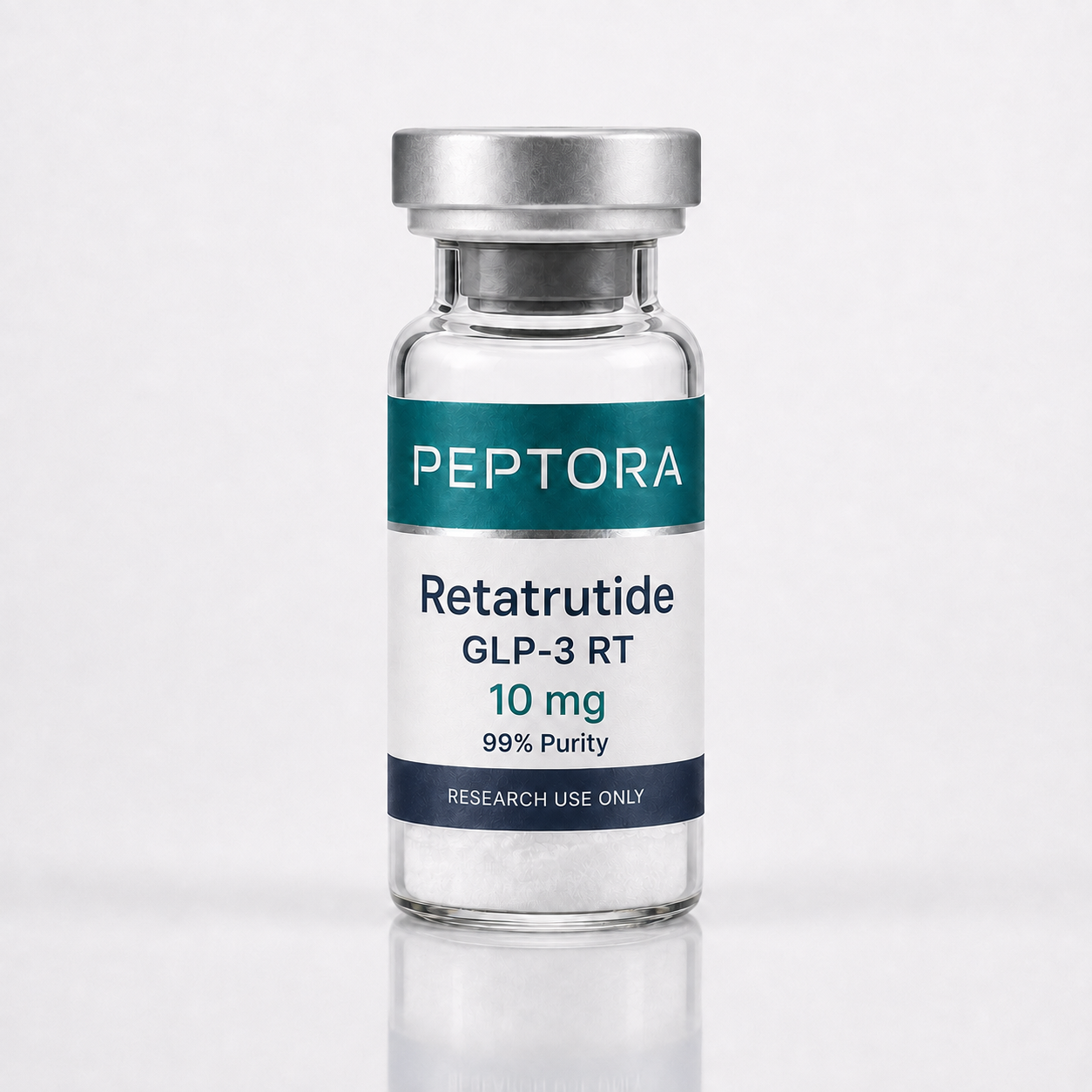
What Is Peptide Net Content Testing?
Peptide net content testing estimates the amount of target material present in a tested vial or sample and reports it in units such as milligrams. The labelled quantity is the nominal amount printed on the label; the measured amount is the analytical result.
A useful peptide net content testing report identifies the sample or batch, method, units, number of samples and whether the value represents one vial or an average. Without that context, a milligram figure can be misinterpreted.
Peptide Net Content Testing Is Not Purity Testing
A vial can have high chromatographic purity while its measured quantity differs from the label. Neither number replaces the other.
Purity percentage
Purity commonly describes the principal detected chromatographic peak relative to total integrated peak area under the stated method. It is not a direct milligram measurement.
Measured net content
Net content estimates target-material quantity, typically in milligrams, using calibration, reference materials or another suitable quantitative approach.
How Peptide Net Content May Be Measured
There is no universal assay for every peptide. The technique depends on the analyte, standard, matrix and laboratory procedure.
Calibrated chromatography
A chromatographic response may be compared with qualified standards using a quantitative method.
Amino-acid analysis
Selected amino acids may be measured after controlled hydrolysis and used to calculate peptide quantity.
Quantitative MS or qNMR
Quantitative mass spectrometry or NMR may be used with appropriate standards, calibration and validation.
A qualitative identity result alone should not be interpreted as a quantitative milligram assay.
Individual Vials and Batch-Average Net Content
| Reporting format | What it describes | What to verify |
|---|---|---|
| Single-vial result | The measured amount in one tested sample. | Vial ID, method, result and units. |
| Average across vials | The arithmetic mean of multiple samples. | Sample count and reported variability. |
| Nominal label claim | The quantity stated on the label. | Do not mistake it for a measured result. |
A batch average does not mean every vial contains the exact average. It summarizes the tested samples; sampling, analytical uncertainty and vial-to-vial variation affect interpretation.
Finding Peptide Net Content Testing on a COA
Match the certificate to the applicable batch before interpreting the result. Peptora product pages present hosted COAs and direct laboratory verification where available.
Peptide Net Content Testing FAQ
Does 99% purity mean a vial contains 99% of the labelled milligrams?
What is the difference between labelled and measured amount?
Is a batch average the result for every vial?
Can LC-MS identity testing measure net content?
Why might a measured result differ from the label?
Can one batch result be applied to another?
Related Peptide Testing Guides
LC-MS Identity Testing
Learn how molecular-mass evidence supports identity assessment.
Read the guide →Testing Beyond Purity
Understand why broader testing uses separate analytical methods.
Read the guide →Peptide Net Content Testing Sources
- United States Pharmacopeia: Peptide quality standards
- NIST: Quantitative amino-acid measurement by isotope-dilution LC-MS/MS
- FDA/ICH Q1A(R2): Stability testing principles