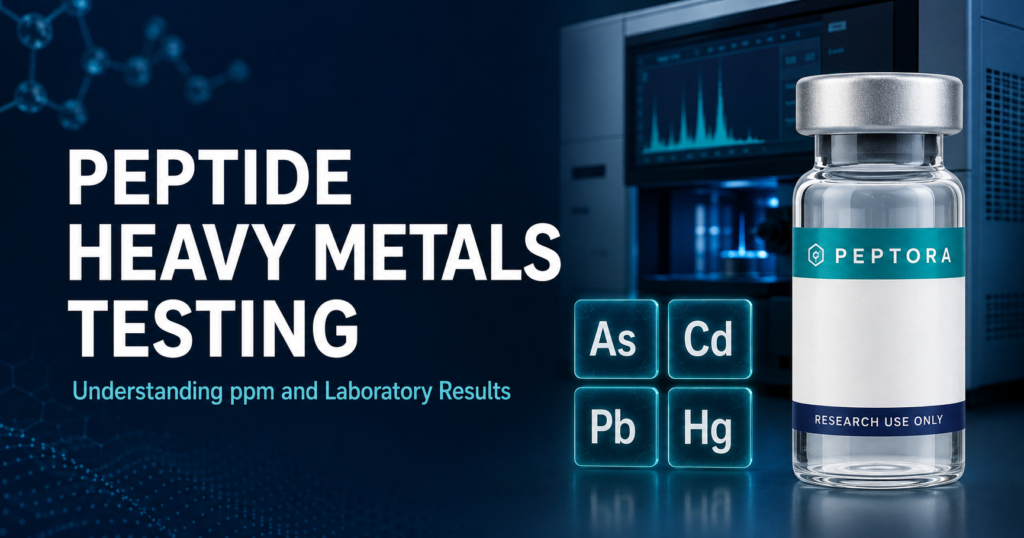
Peptide Heavy Metals Testing: Understanding ppm and Laboratory Results
Learn how peptide heavy metals testing measures arsenic, cadmium, lead and mercury, what ppm means and how to review elemental results on a batch-specific COA.

Learn how peptide heavy metals testing measures arsenic, cadmium, lead and mercury, what ppm means and how to review elemental results on a batch-specific COA.
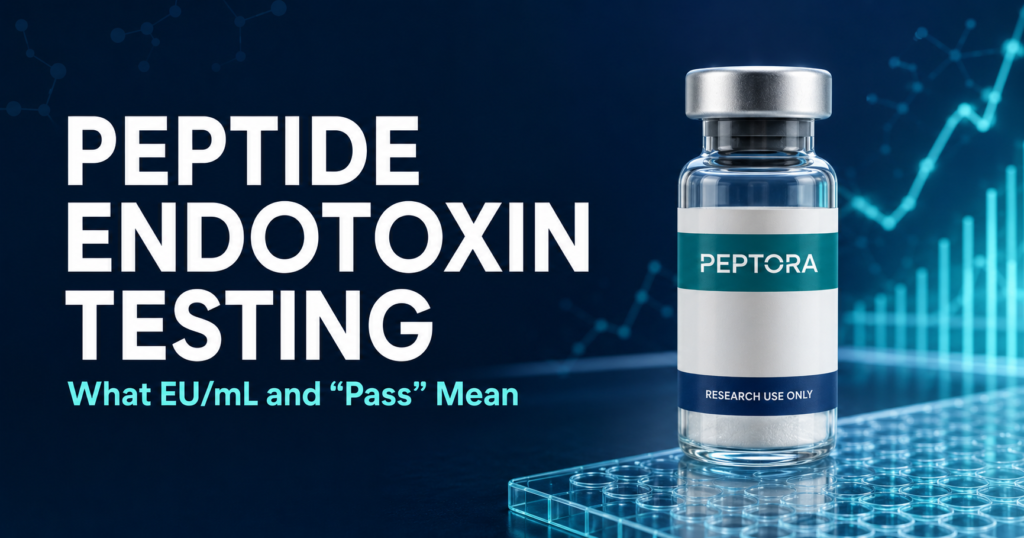
Learn how peptide endotoxin testing works, what EU/mL and pass results mean, and why endotoxin testing differs from sterility testing.
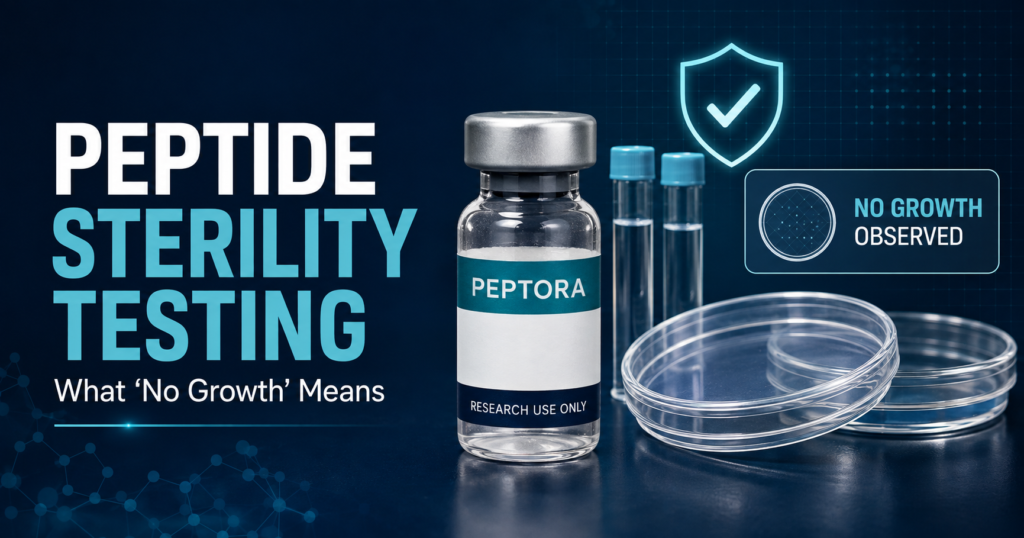
Learn how peptide sterility testing works, what a no-growth result means, why sterility differs from endotoxin testing and what to verify on a COA.
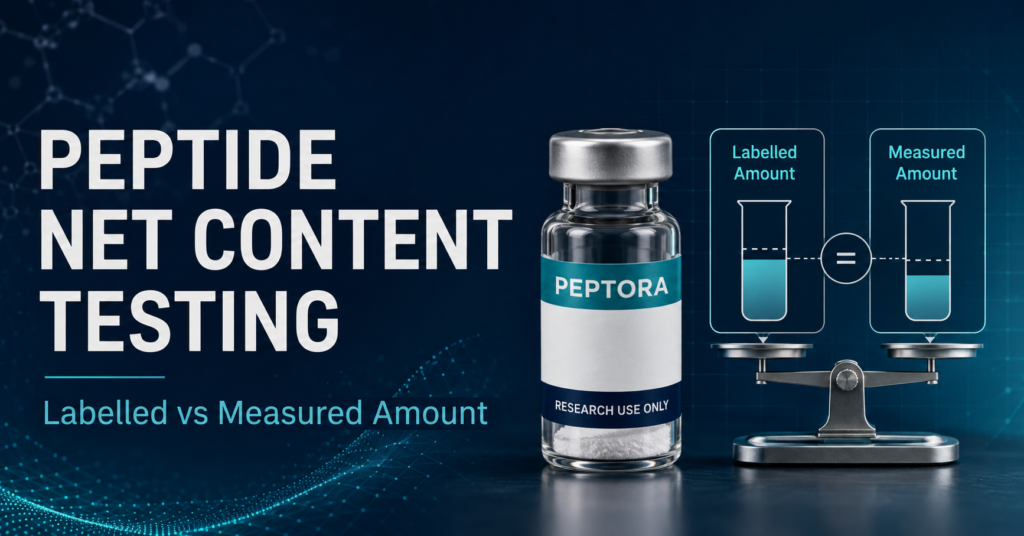
Learn how peptide net content testing compares labelled and measured amounts, why purity does not equal milligrams per vial, and what to verify on a COA.
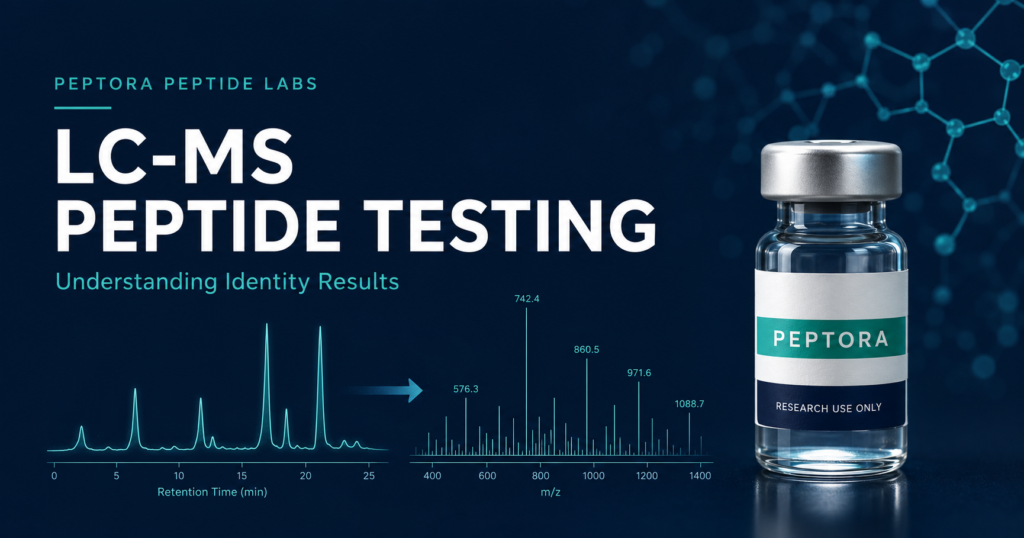
Learn how LC-MS peptide testing supports identity assessment, how it differs from HPLC purity and what researchers should verify on a peptide COA.
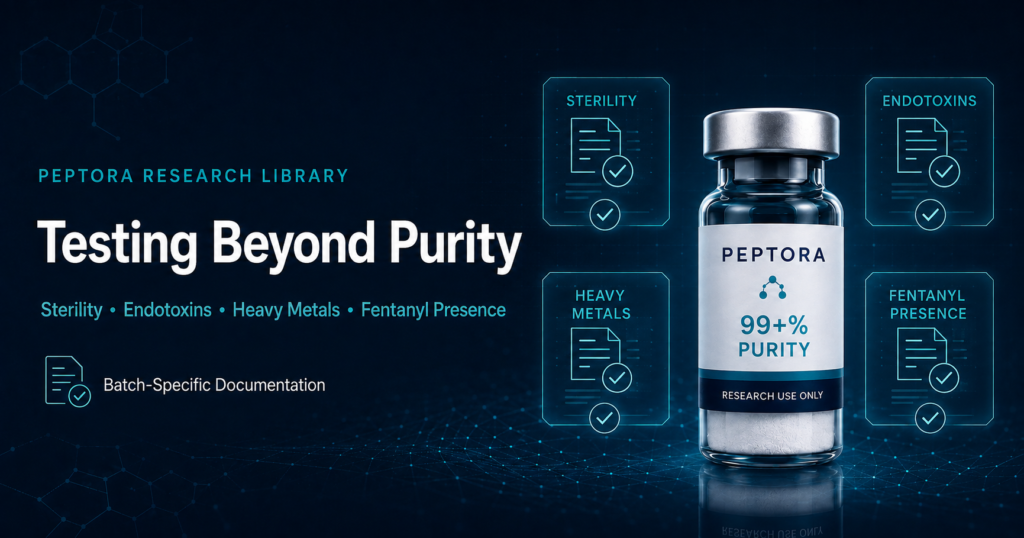
Peptide testing beyond purity examines separate analytical questions including identity, net content, sterility, endotoxins, elemental impurities and targeted fentanyl-presence screening.
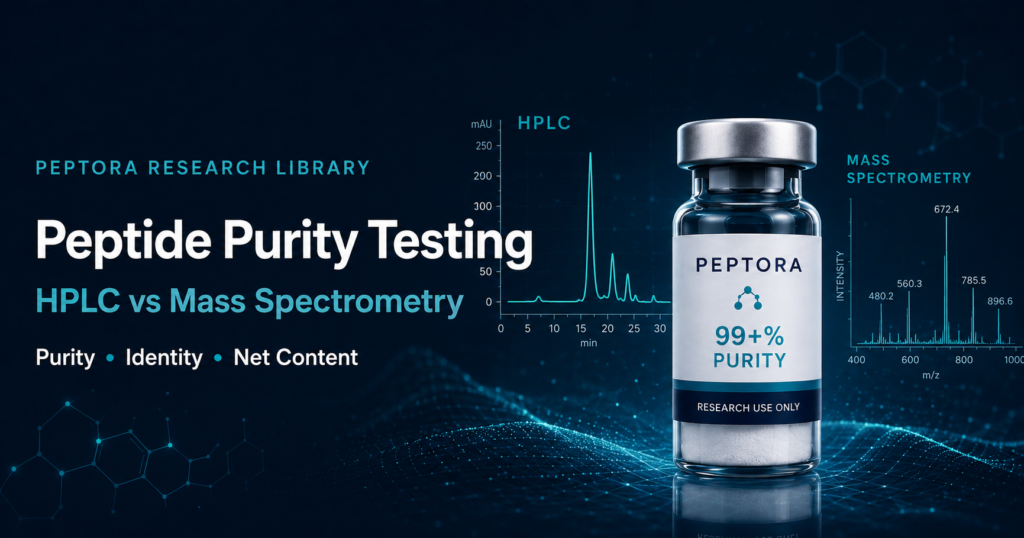
Learn how HPLC and mass spectrometry contribute to peptide purity testing—and why purity, identity, net content and expanded screening should be reviewed separately.
Learn how to review a peptide Certificate of Analysis, including batch matching, identity, purity, net content, sterility, endotoxins and independent verification.