This guide answers what are research peptides and explains their structure, laboratory purpose, documentation, testing and responsible evaluation in Canada.
What Are Research Peptides? A Canadian Laboratory Guide
What are research peptides? They are amino-acid-based materials supplied for controlled, non-clinical laboratory investigation. This guide explains what the term means, how peptides are structured and what documentation researchers should review before ordering.
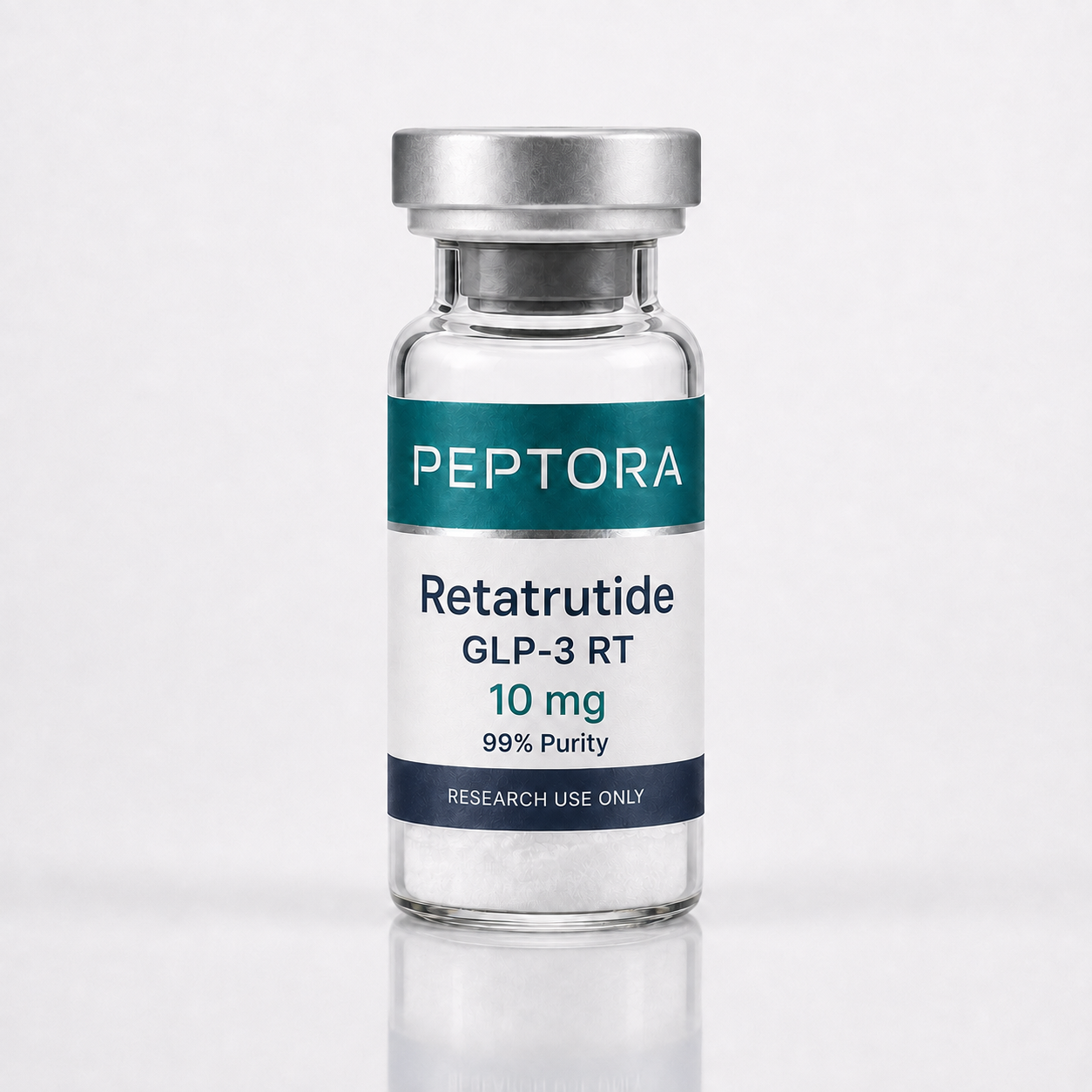
What Are Research Peptides?
Research peptides are short or moderate chains of amino acids made available for controlled laboratory investigation. A peptide may be studied for its chemical structure, analytical characteristics, stability or behaviour within an appropriately designed non-clinical experimental system.
The term research peptide describes the product's intended laboratory context. It does not establish that the material is an approved medicine, treatment, diagnostic product or consumer supplement.
Peptora products are supplied strictly for non-clinical laboratory research. They are not intended for human or animal consumption.
What Are Research Peptides Made From?
Peptides are composed of amino acids joined in a defined order through peptide bonds. Their sequence forms the primary structure of the molecule.
Amino acids
Amino acids are the individual molecular building blocks arranged within a peptide sequence.
Peptide bonds
Peptide bonds are the covalent connections linking adjacent amino acids together.
Sequence
The order of amino acids defines the peptide's primary structure and contributes to its properties.
How Research Peptides Are Studied
The research question, experimental model and laboratory protocol determine how a peptide material is evaluated.
Structural investigation
Researchers may examine molecular mass, amino-acid sequence, conformation and related structural characteristics.
Analytical characterization
Methods such as HPLC and mass spectrometry provide different information about a sample's composition, purity and identity.
Stability research
Controlled studies may investigate how temperature, light, time and defined experimental conditions affect a sample.
Research Peptide Documentation and Batch Matching
Useful documentation should connect the physical material to an identified batch. Researchers should compare the product name, batch or lot number and report identifier before relying on a Certificate of Analysis.
A generic certificate or a report for a different lot cannot establish the analytical characteristics of the batch being supplied. Results should not be generalized from one batch to another without supporting analysis.
What Research Peptide Testing Can Report
No single test answers every analytical question. The scope depends on the methods commissioned for the specific material and batch.
What Canadian Researchers Should Review
When comparing research materials, documentation and traceability provide more useful information than price or catalogue size alone.
- Confirm the compound name, labelled quantity and product form.
- Match the physical product batch to its applicable certificate.
- Review identity, purity and net-content results separately.
- Check which additional analyses were actually commissioned.
- Use independent report verification when it is available.
- Review storage, shipping, return and contact information.
- Confirm that the intended-use restriction is clearly stated.
- Open and read the complete laboratory report before ordering.
What Are Research Peptides? Frequently Asked Questions
Are research peptides medicines?
No. A material sold for laboratory research is not represented as an approved medicine, treatment or consumer supplement. Peptora products are restricted to non-clinical laboratory research.
What are research peptides commonly supplied as?
Many are supplied as lyophilized material in sealed vials. The product listing should identify the compound, labelled quantity, form and batch information.
Does a purity result confirm peptide identity?
Not by itself. Purity and identity are different analytical questions. Researchers should review the methods and results reported for each characteristic.
Why does the batch number matter?
The batch number connects the physical product with its applicable documentation. A report for another batch should not be assumed to describe the product received.
What should a research peptide COA include?
Depending on the testing scope, a COA may include sample and batch identifiers, methods, identity, purity, content, additional analyses, dates and laboratory authorization.
Are Peptora products intended for human or animal use?
No. Peptora products are sold strictly for controlled, non-clinical laboratory research and are not intended for human or animal consumption.
Related Research and Testing Resources
Scientific and Regulatory Sources
- U.S. National Library of Medicine — Peptides, MeSH Descriptor Data
- Muttenthaler M, et al. Biochemistry, Peptide
- Characterization of Synthetic Peptide Therapeutics Using Liquid Chromatography and Mass Spectrometry
- Related Impurities in Peptide Medicines
Research Peptide Education
Continue Learning
Continue with practical information about lyophilized research materials, responsible storage and Peptora’s complete educational library.