This lyophilized research peptides guide explains freeze-drying, vial appearance, documentation, storage and responsible laboratory handling.
Lyophilized Research Peptides: What Does Lyophilized Mean?
Lyophilized research peptides have undergone a controlled freeze-drying process that removes water from a frozen material under vacuum. This guide explains the process, what researchers may observe inside a vial and which product records should be reviewed.
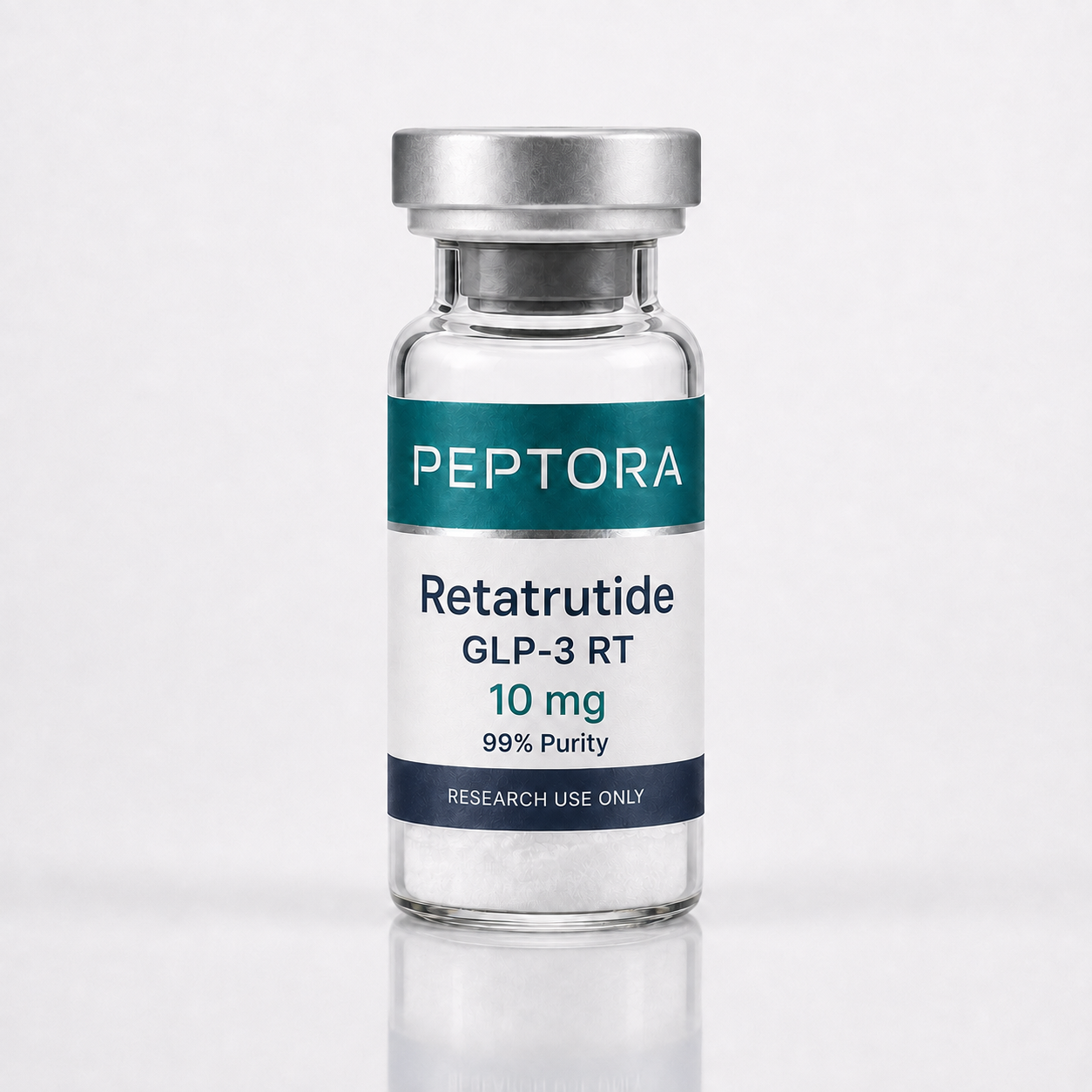
What Are Lyophilized Research Peptides?
Lyophilized research peptides are peptide materials processed by freeze-drying. The material is frozen and placed under vacuum so frozen water can move directly from solid ice to vapour through sublimation.
The FDA describes lyophilization as three interdependent stages: freezing, primary drying by sublimation and secondary drying by desorption. The exact cycle and formulation are specific to the material being processed.
Lyophilization changes the physical presentation of a sample; it does not independently establish identity, purity, measured content, sterility or any other analytical result.
How Lyophilized Research Peptides Are Produced
Freeze-drying is a controlled sequence rather than simple air drying. Each stage influences the final dried presentation.
Freezing
The prepared material is cooled until water within the formulation forms ice. Freezing conditions influence ice formation and the resulting dried structure.
Primary drying
Pressure is reduced and controlled heat is applied so ice sublimes directly into vapour without first becoming liquid water.
Secondary drying
Temperature and pressure are controlled further to reduce additional moisture associated with the dried material.
How Lyophilized Research Peptides May Look
The visible dried material can vary with formulation, fill volume, vial geometry, freezing conditions and the drying cycle.
Compact cake
Some dried materials form a coherent structure that reflects the approximate shape of the material before drying.
Film or fragments
A sample may appear as a thin film, fragmented cake or material attached to part of the vial surface.
Loose powder
Other formulations may present as loose or partially compacted powder. Appearance alone cannot determine analytical quality.
Lyophilized Research Peptide Documentation
The product listing should identify the compound, labelled quantity, product form and applicable batch. Researchers should match the batch or lot identifier to the Certificate of Analysis.
The certificate should be reviewed for the analyses actually performed. A lyophilized presentation does not replace identity, purity, net-content or expanded testing documentation.
Storage of Lyophilized Research Peptides
Storage requirements are material- and formulation-specific. Follow the conditions supplied for the particular product and keep the vial sealed, protected from light and within the documented temperature range.
Lyophilized Research Peptides Checklist
Review the product information and documentation before accepting the appearance of a dried vial as meaningful evidence.
- Confirm the compound name and labelled quantity.
- Verify that the product form is identified as lyophilized.
- Match the physical vial batch to its applicable certificate.
- Review identity, purity and net-content results separately.
- Check which additional analyses were commissioned.
- Follow the product-specific unopened storage conditions.
- Keep the vial closure, label and batch identification intact.
- Read the complete laboratory report before ordering.
Lyophilized Research Peptides FAQ
What does lyophilized mean?
Lyophilized means freeze-dried. Water is removed after the material is frozen and placed under vacuum, allowing ice to pass directly into vapour.
Why are research peptides lyophilized?
Freeze-drying reduces water in the supplied material and can support a defined dry presentation. The suitability and stability of a formulation remain product-specific.
Should every lyophilized vial look identical?
No. Cake shape, fragmentation, film and powder appearance can vary with formulation and processing. Appearance alone does not establish analytical quality.
Does lyophilization prove purity or identity?
No. Purity and identity require appropriate analytical methods and batch-specific documentation.
How should an unopened lyophilized vial be stored?
Follow the storage conditions stated for the specific product. Keep the closure intact and protect the vial from light, moisture and unsuitable temperatures as directed.
Are Peptora products intended for human or animal use?
No. Peptora products are sold strictly for controlled, non-clinical laboratory research and are not intended for human or animal consumption.
Related Research Peptide Resources
Scientific and Regulatory Sources
- U.S. Food and Drug Administration — Lyophilization of Parenteral Products
- A Review on Parenteral Delivery of Peptides and Proteins
- Excipients in Freeze-Dried Biopharmaceuticals
- Lyophilized Drug Product Cake Appearance: What Is Acceptable?
Research Peptide Education
Continue Learning
Review the fundamentals of research peptides, learn about responsible storage and explore Peptora’s complete educational library.