Research Library. Scientific Context, Organized.
The Peptora Research Library brings together compound-specific research, peptide testing education, Certificates of Analysis guidance and laboratory-reference resources for non-clinical research.
Research Overviews
Compound-specific scientific context, research comparisons and blend-reference articles.
Testing & COA Guides
Understand purity, identity, measured content, analytical methods and batch verification.
Research Guides
Peptide terminology, scientific documentation and responsible laboratory-reference education.
Explore educational resources covering peptide purity, identity, Certificates of Analysis, analytical methods, batch documentation and testing standards.
Learn how to interpret peptide purity testing in Ontario, what a reported purity percentage represents, and why purity should be reviewed alongside identity, batch traceability and other…
Learn why peptide batch testing matters for Ontario research buyers and how batch-specific reports help connect laboratory results with the material being ordered.
Learn how to verify a peptide COA in Ontario by checking batch numbers, laboratory records, test methods and reported results before ordering research materials.
Ontario research buyers can use this peptide testing guide to review batch-specific COAs, analytical scope, report details and independent verification before ordering.
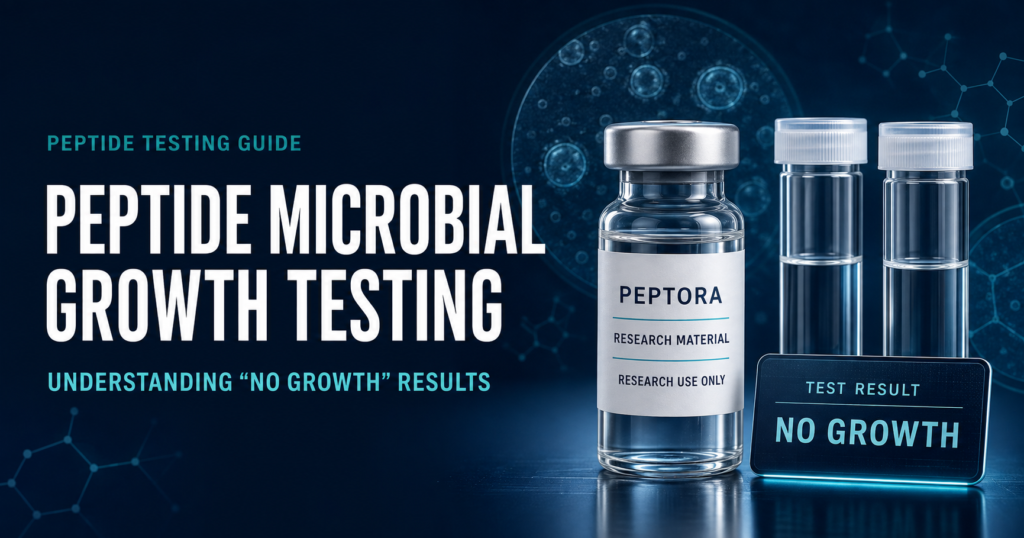
Learn how microbial growth testing is reported for research peptides, what “no growth” means and why each result belongs to an identified batch.
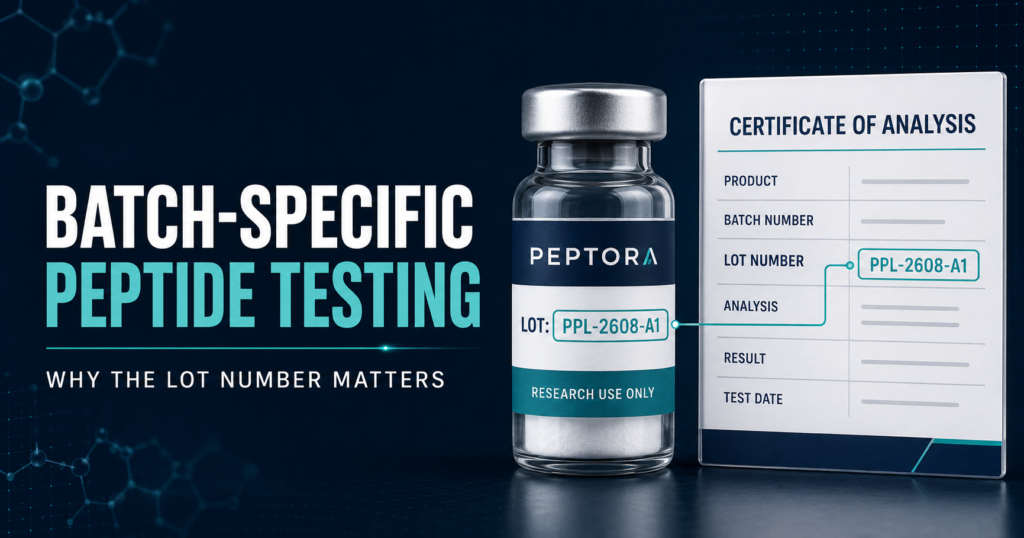
Learn why peptide testing results belong to an identified batch, how to match a vial with its COA and what must change when inventory moves to a…
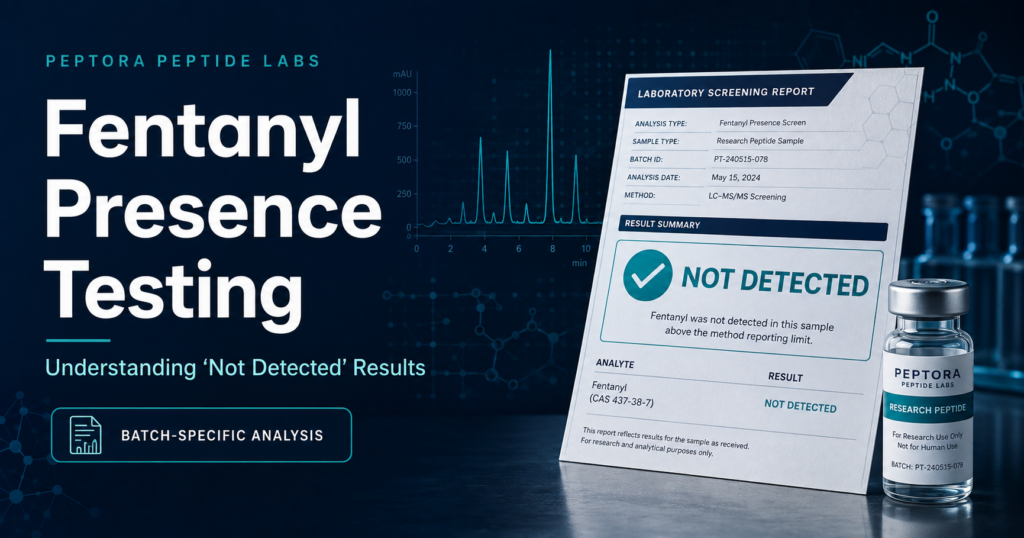
Learn how peptide fentanyl presence testing is reported, what “not detected” means and why results remain specific to the tested sample and batch.
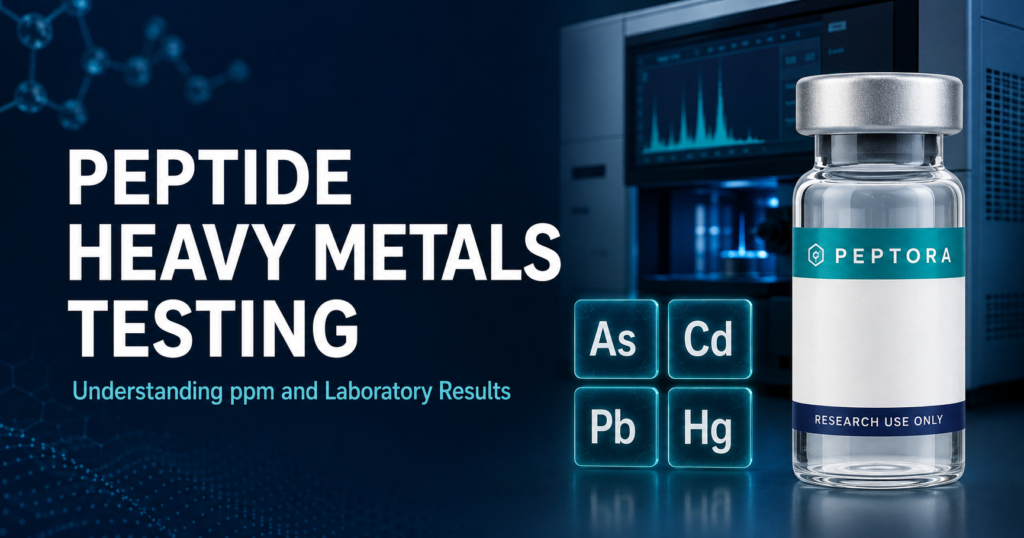
Learn how peptide heavy metals testing measures arsenic, cadmium, lead and mercury, what ppm means and how to review elemental results on a batch-specific COA.
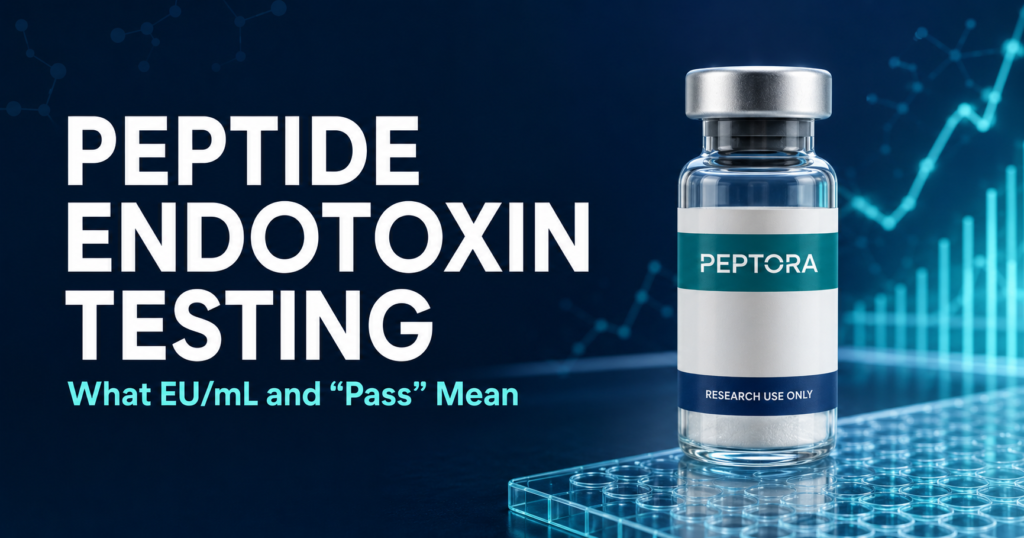
Learn how peptide endotoxin testing works, what EU/mL and pass results mean, and why endotoxin testing differs from sterility testing.
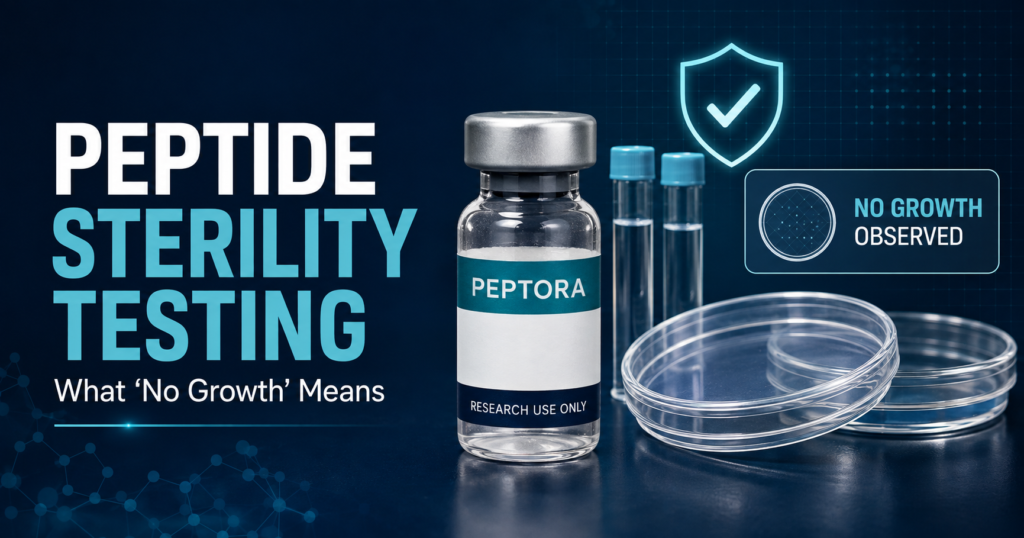
Learn how peptide sterility testing works, what a no-growth result means, why sterility differs from endotoxin testing and what to verify on a COA.
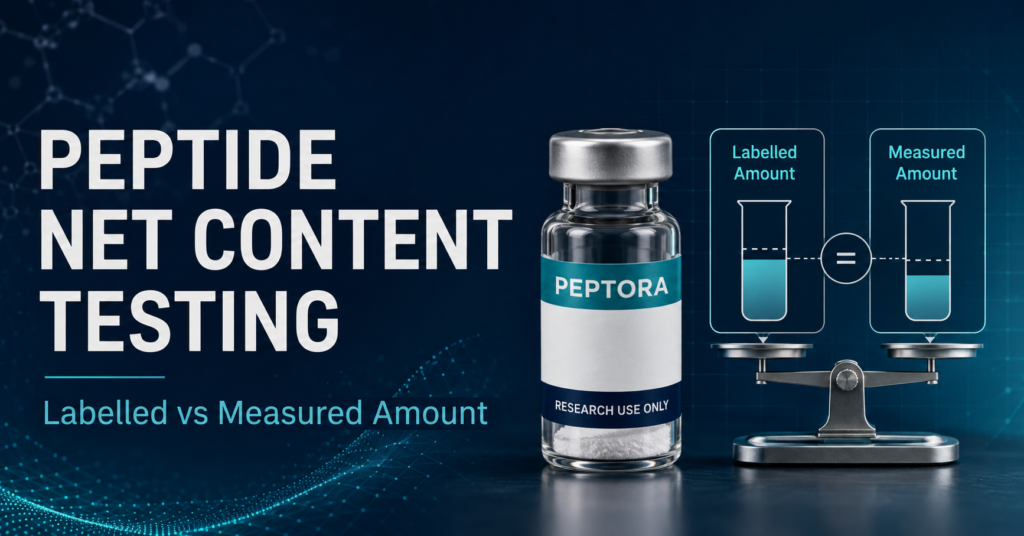
Learn how peptide net content testing compares labelled and measured amounts, why purity does not equal milligrams per vial, and what to verify on a COA.
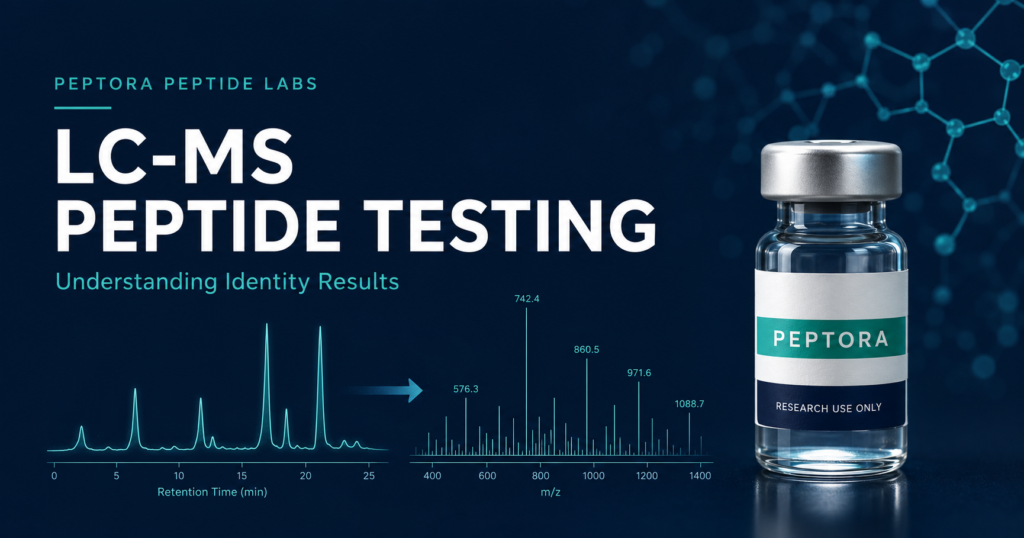
Learn how LC-MS peptide testing supports identity assessment, how it differs from HPLC purity and what researchers should verify on a peptide COA.
Peptora’s Research Library provides educational
context for non-clinical laboratory research.
Product-specific analytical results should always
be reviewed against the Certificate of Analysis
and batch identifier for the material being
referenced.
Peptide Testing & COA Guides
Testing & COA Articles
Showing newest published resources first
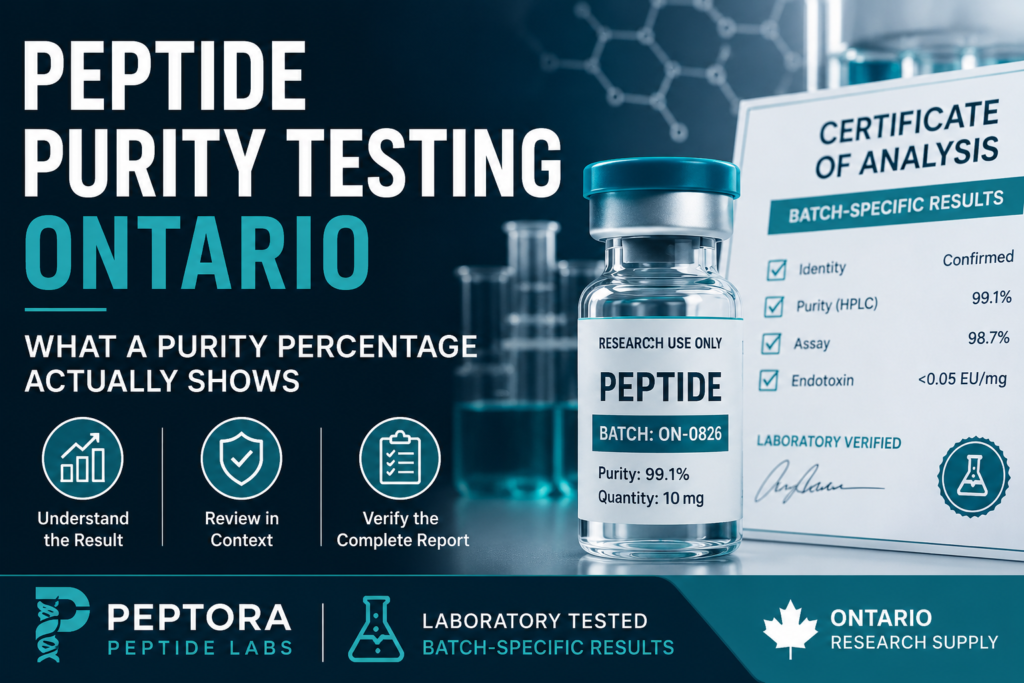 Peptide Testing
Peptide Purity Testing Ontario: What a Purity Percentage Actually Shows
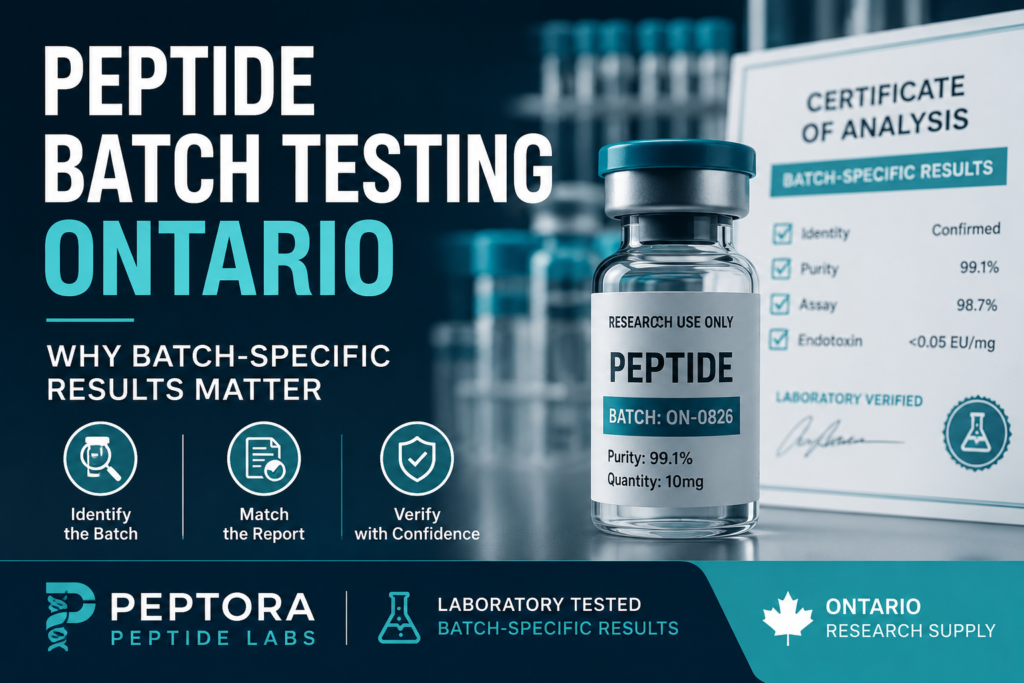 Peptide Testing
Peptide Batch Testing Ontario: Why Batch-Specific Results Matter
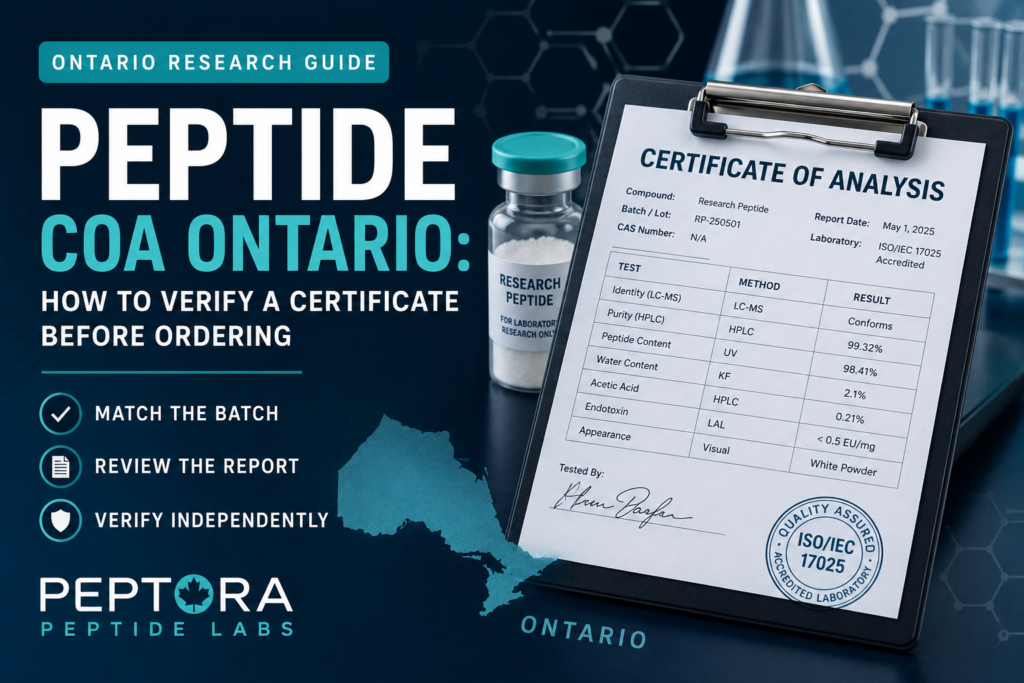 Peptide Testing
Peptide COA Ontario: How to Verify a Certificate Before Ordering
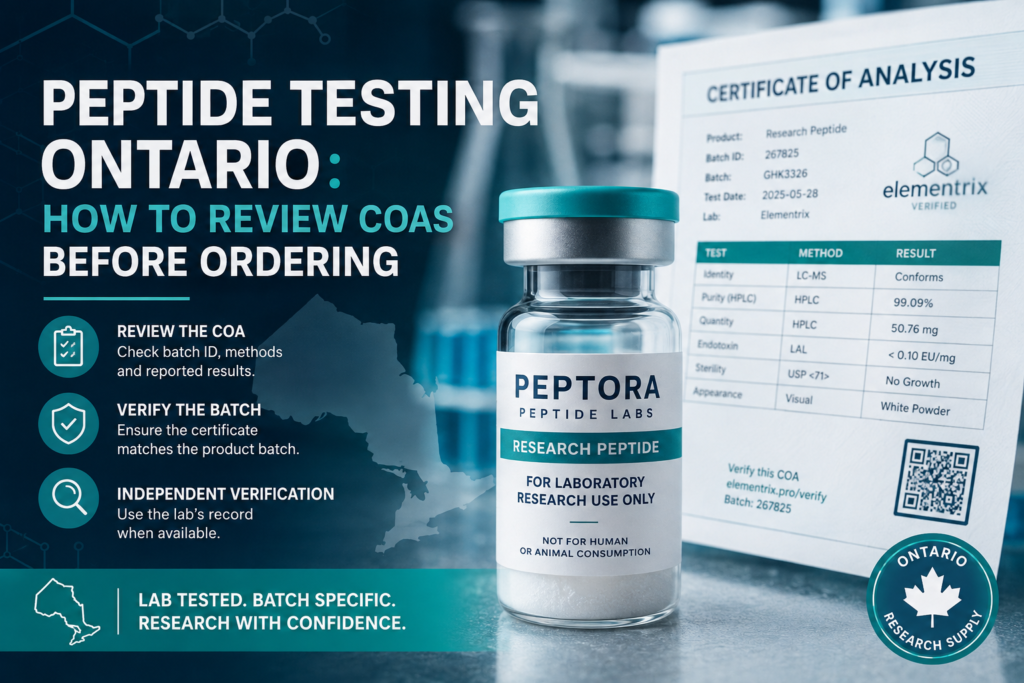 Peptide Testing
Peptide Testing Ontario: How to Review COAs Before Ordering
 Peptide Testing
Peptide Microbial Growth Testing: Understanding Sterility Results
 Peptide Testing
Batch-Specific Peptide Testing: Why the Lot Number Matters
 Peptide Testing
Peptide Fentanyl Presence Testing: What “Not Detected” Means
 Peptide Testing
Peptide Heavy Metals Testing: Understanding ppm and Laboratory Results
 Peptide Testing
Peptide Endotoxin Testing: What EU/mL and “Pass” Mean
 Peptide Testing
Peptide Sterility Testing: What “No Growth” Means
 Peptide Testing
Peptide Net Content Testing: Labelled vs Measured Amount
 Peptide Testing
LC-MS Peptide Testing: Understanding Identity Results
Research Documentation & Testing
Understand Peptide Testing & COAs
Explore Peptora’s educational resources covering Certificates of Analysis, analytical testing methods, purity, identity and batch-specific documentation for non-clinical laboratory research.
How to Read a Peptide Certificate of Analysis
Learn how identity, purity, measured content and other laboratory-reported results can be presented on a peptide Certificate of Analysis.
Read the COA guide 02 EXPANDED TESTINGPeptide Testing Beyond Purity
Understand why a reported purity percentage represents only one part of broader analytical testing, documentation and batch evaluation.
Explore testing beyond purity 03 ANALYTICAL METHODSHPLC vs Mass Spectrometry
Review the different roles of HPLC purity analysis and mass spectrometry when evaluating laboratory-reported peptide results.
Compare testing methods 04 BATCH DOCUMENTATIONBatch-Specific Peptide Testing
Learn why the material, batch identifier, Certificate of Analysis and applicable independent verification reference should correspond.
Learn about batch testingExplore Peptora’s Testing Resources
Browse additional testing education, review Peptora’s laboratory-testing standards or access available batch-specific Certificates of Analysis.
Educational information for non-clinical laboratory research only. Product-specific analytical results apply only to the batch identified on the applicable Certificate of Analysis and supporting documentation.